Downtown Columbus
41 S High St, Suite 270
Columbus, OH 43215
Monday–Thursday, 7:00 AM–4:00 PM. Friday–Sunday closed.
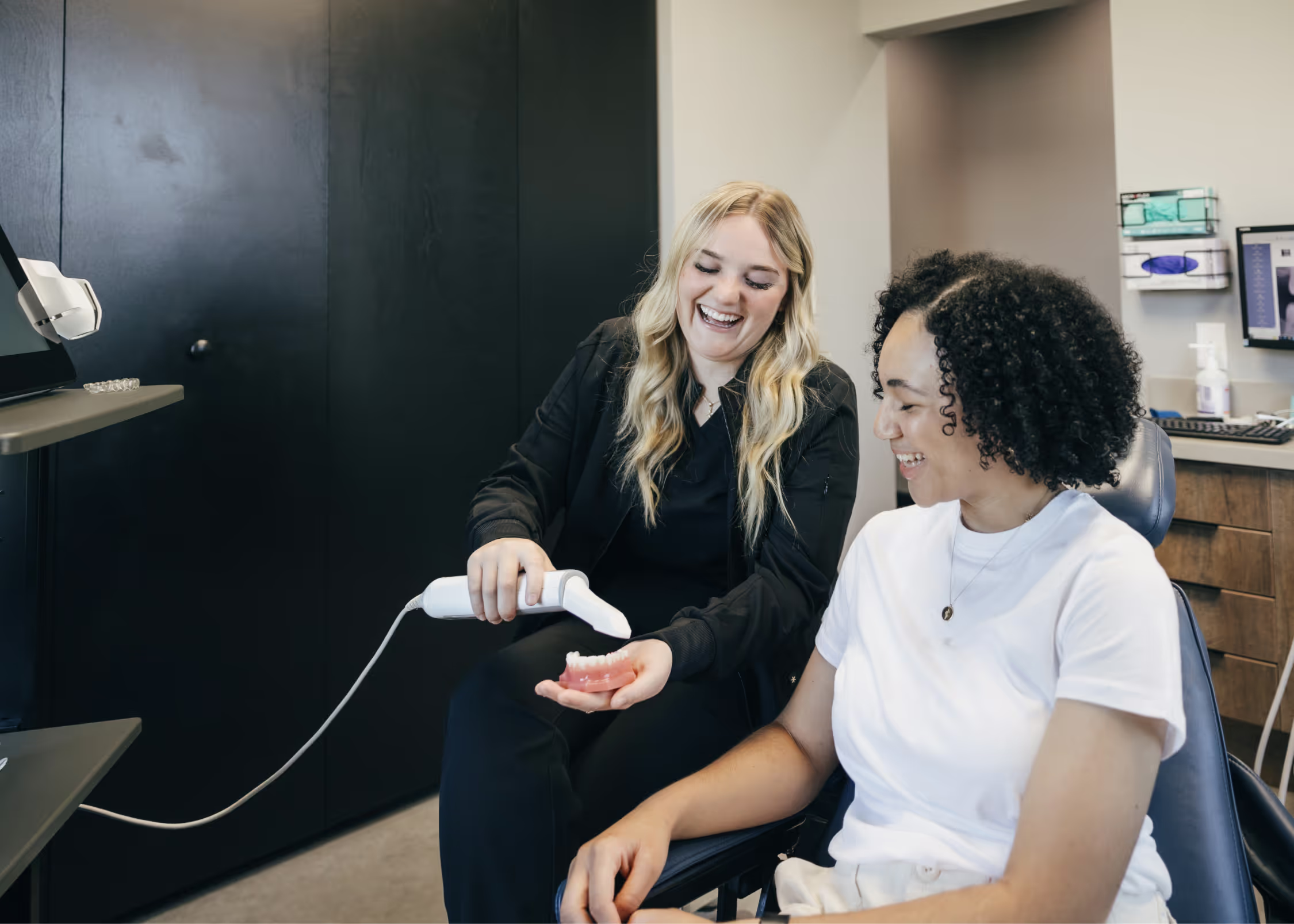

Composite is a mix of fine glass particles and plastic resin. It starts soft so it can be shaped, then hardens. The live practice description says the hardened material becomes stronger than natural tooth structure. Color and translucency can be matched closely enough that, at a cleaning, the edge can be hard to find.
A composite filling is usually about 30 to 60 minutes:
You can eat and drink normally right after. There is no waiting period written into the visit.
Quality composite fillings typically last 7 to 10 years with good care. Size, location, hygiene, grinding, and the material all matter. Capstone uses high-quality composite and careful placement. Dr. Snipes’s work with advanced dental technology is part of how those restorations are finished.
Most people with a small or moderate cavity are candidates, especially if you want a natural look, prefer mercury-free material, need a visible tooth repaired, have a metal sensitivity, or are pregnant. The consult is where your specific tooth gets the recommendation.
Before treatment starts, you get a written, personalized estimate.
When the shade is matched and the filling is polished, it should be very hard to see.
The area is numbed. Mild sensitivity for a day or two is common as the tooth settles.
Brush twice a day, floss, and keep cleanings. Don’t use teeth as tools. A night guard is worth discussing if you grind.
Composite is durable, but ice and hard candy can chip it. Coffee and red wine can stain slowly over years. Polishing at a cleaning often helps.
If you suspect a cavity, earlier treatment is usually simpler. Dr. Snipes and the team will look, answer questions, and map a plan. Offices are in Columbus, Blacklick, and Hilliard.
Call one of our three convenient office locations, or book online.
Downtown Columbus
41 S High St, Suite 270
Columbus, OH 43215
Monday–Thursday, 7:00 AM–4:00 PM. Friday–Sunday closed.
Blacklick
145 Reynoldsburg-New Albany Rd, Suite 200
Blacklick, OH 43004
Monday–Thursday, 8:00 AM–5:00 PM. Friday–Sunday closed.
Hilliard
3720 Ridge Mill Dr, Suite C
Hilliard, OH 43026
Monday–Wednesday, 8:00 AM–5:00 PM. Thursday–Sunday closed.